

The Invisible Threat to Your Drinking Water
When you turn on your kitchen faucet to fill a glass of water, you expect that water to be perfectly clean, safe, and heavily pressurized. What you do not expect is for the pesticide-laced puddle in your yard, the dirty water in your garden hose, or the stagnant water in your fire sprinkler system to get sucked backward into your home’s drinking supply.
This dangerous reversal of water flow is known as backflow, and it happens when there is a sudden, massive drop in municipal water pressure (such as when a fire truck opens a nearby hydrant or a city water main breaks). This pressure drop creates a vacuum that siphons contaminated water back into the clean municipal supply.
To prevent this biological hazard, the City of Tulsa mandates the installation of backflow preventers on specific residential and commercial water lines. However, navigating the municipal code can be incredibly confusing. There are multiple types of backflow devices, and installing the wrong one will result in a failed city inspection and zero protection for your family.
At Top Shelf Plumbing, proudly known as “America’s Plumbing Team,” we believe in keeping your water supply strictly isolated and perfectly safe. In this comprehensive guide, we will break down the four most common backflow preventers, exactly what hazard levels they protect against, and how to know which one belongs on your property.
The 4 Primary Types of Backflow Devices
Backflow preventers are categorized by the “hazard level” they are designed to stop. A low-hazard scenario might involve stagnant water that tastes bad but won’t harm you, while a high-hazard scenario involves toxic chemicals, raw sewage, or fertilizers that are lethal if ingested.
Here are the four devices most commonly utilized in Green Country:
1. Atmospheric Vacuum Breaker (AVB)
The AVB is the simplest, most affordable, and least mechanical backflow device. It utilizes a simple air inlet valve that drops down when water pressure is lost, introducing air into the pipe to break the siphon vacuum.
- The Catch: An AVB cannot be subjected to continuous water pressure (meaning you cannot leave a shut-off valve open downstream for more than 12 hours). It must also be installed at least 6 inches higher than the highest water outlet it is protecting.
- Best For: Simple, single-zone residential irrigation systems or utility sink hose bibbs.
2. Pressure Vacuum Breaker (PVB)
The PVB is one of the most common residential backflow preventers. Similar to the AVB, it relies on an air inlet to break a vacuum, but it is spring-loaded, allowing it to withstand continuous water pressure. It includes test cocks, meaning a certified plumber can easily test it annually to ensure it is functioning.
- The Catch: PVBs only protect against back-siphonage (a vacuum). They do not protect against back-pressure (when a pump downstream forces water backward). Like the AVB, it must be installed 12 inches above the highest sprinkler head, which can be an eyesore in some yards.
- Best For: Standard residential underground sprinkler systems without fertilizer injectors.
3. Double Check Valve Assembly (DCVA)
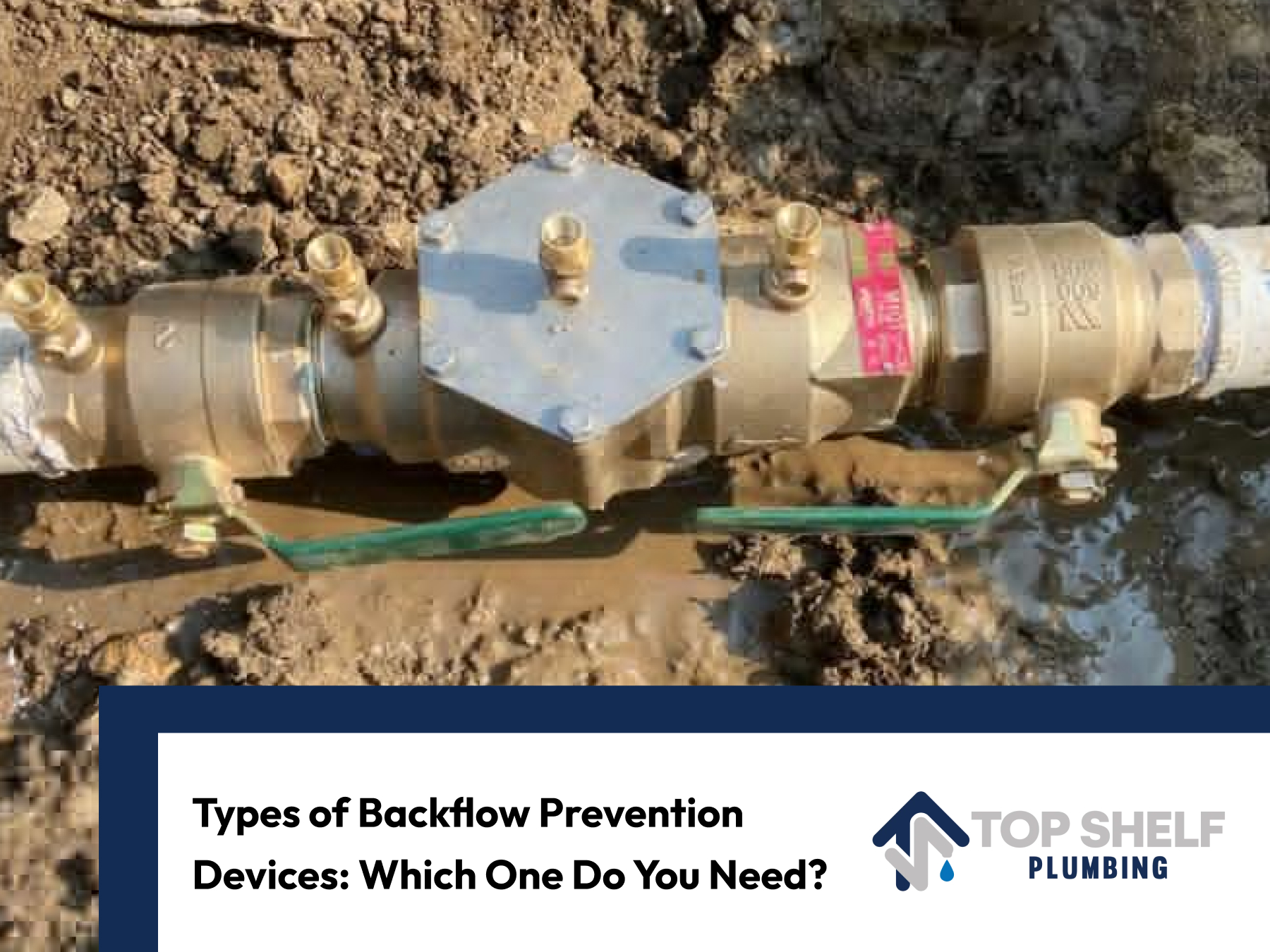
As the name implies, this device features two spring-loaded check valves in a series, housed inside a single brass body. If one valve fails, the second serves as a backup. The DCVA is highly versatile because it protects against both back-siphonage and back-pressure, and it can be installed horizontally or vertically, even underground in a valve box.
- The Catch: The DCVA is only rated for low-hazard applications. Because it does not feature an external relief valve, there is no visual indicator if both internal valves fail simultaneously.
- Best For: Residential fire sprinkler systems and low-risk commercial water lines.
4. Reduced Pressure Zone (RPZ) Assembly
The RPZ is the gold standard of backflow prevention. It is the most complex, most secure, and most heavily regulated device on the market. It utilizes two independent check valves separated by a pressure-monitored relief chamber. If either check valve fails, or if back-pressure occurs, the relief valve violently dumps the contaminated water out onto the ground, physically preventing it from entering the clean water supply.
- The Catch: Because the RPZ dumps water when it detects a failure, it must be installed above ground in an area with excellent drainage.
- Best For: High-hazard scenarios. If you use a fertigation system (injecting liquid fertilizer directly into your sprinkler lines), a boiler system with antifreeze, or if you have a commercial property, Tulsa building codes require an RPZ.
Comparing Your Backflow Options
To help you visualize exactly which device suits your property, review this quick comparison matrix:
| Device Type | Hazard Rating | Protects Against Back-Pressure? | Primary Residential Application |
| Atmospheric Vacuum Breaker (AVB) | Low Hazard | No | Basic hose bibbs, tiny irrigation zones. |
| Pressure Vacuum Breaker (PVB) | Low/Moderate Hazard | No | Standard lawn sprinkler systems. |
| Double Check Valve (DCVA) | Low Hazard | Yes | Indoor fire sprinkler networks. |
| Reduced Pressure Zone (RPZ) | High Hazard | Yes | Sprinklers with chemical/fertilizer injectors. |
The Danger of DIY Backflow Installation
Installing a backflow preventer is not a weekend DIY project. The Oklahoma Construction Industries Board and the City of Tulsa treat backflow prevention as a critical life-safety issue.
If you install the wrong device, or if you install a PVB beneath the height of your highest sprinkler head, the device becomes entirely useless. Furthermore, state law dictates that specific devices (like PVBs and RPZs) must be tested upon installation and annually thereafter by a state-certified Backflow Testing Technician. If a DIY installation fails a municipal inspection, your municipal water supply can be legally shut off until the hazard is remediated by a licensed contractor.
Why Top Shelf Plumbing is Your Backflow Authority
Protecting your drinking water requires absolute precision. You need a contractor who understands the exact municipal codes of Green Country, executes flawless installations, and possesses the specialized licensing required to keep you compliant.
When you choose Top Shelf Plumbing for your backflow installation or testing, you experience our three foundational core values:
- Service With Honesty: We evaluate your property’s specific hazard level and recommend the exact device you need to meet code—nothing more, nothing less. We provide transparent, upfront, flat-rate pricing before we lift a wrench.
- Service With A Smile: Municipal compliance can be stressful. Our highly trained, state-certified technicians arrive in clean uniforms with a friendly, educational approach. We handle the permit paperwork, execute the testing, and leave your property perfectly clean.
- Service With Integrity: We use premium, heavy-duty brass components that are built to withstand Oklahoma’s extreme freeze-thaw cycles. We test and calibrate every device we install, ensuring your family’s water remains untainted and safe.
Secure Your Water Supply Today
Don’t let a sudden drop in water pressure pull lawn chemicals or stagnant water into your kitchen sink. Keep your home safe, compliant, and comfortable by partnering with the local experts who never cut corners.
Need a new backflow preventer installed or your current device tested? Call America’s Plumbing Team today at (844) 984-3984 to schedule your certified service. Let Top Shelf Plumbing protect your home with honesty, integrity, and a smile!
