

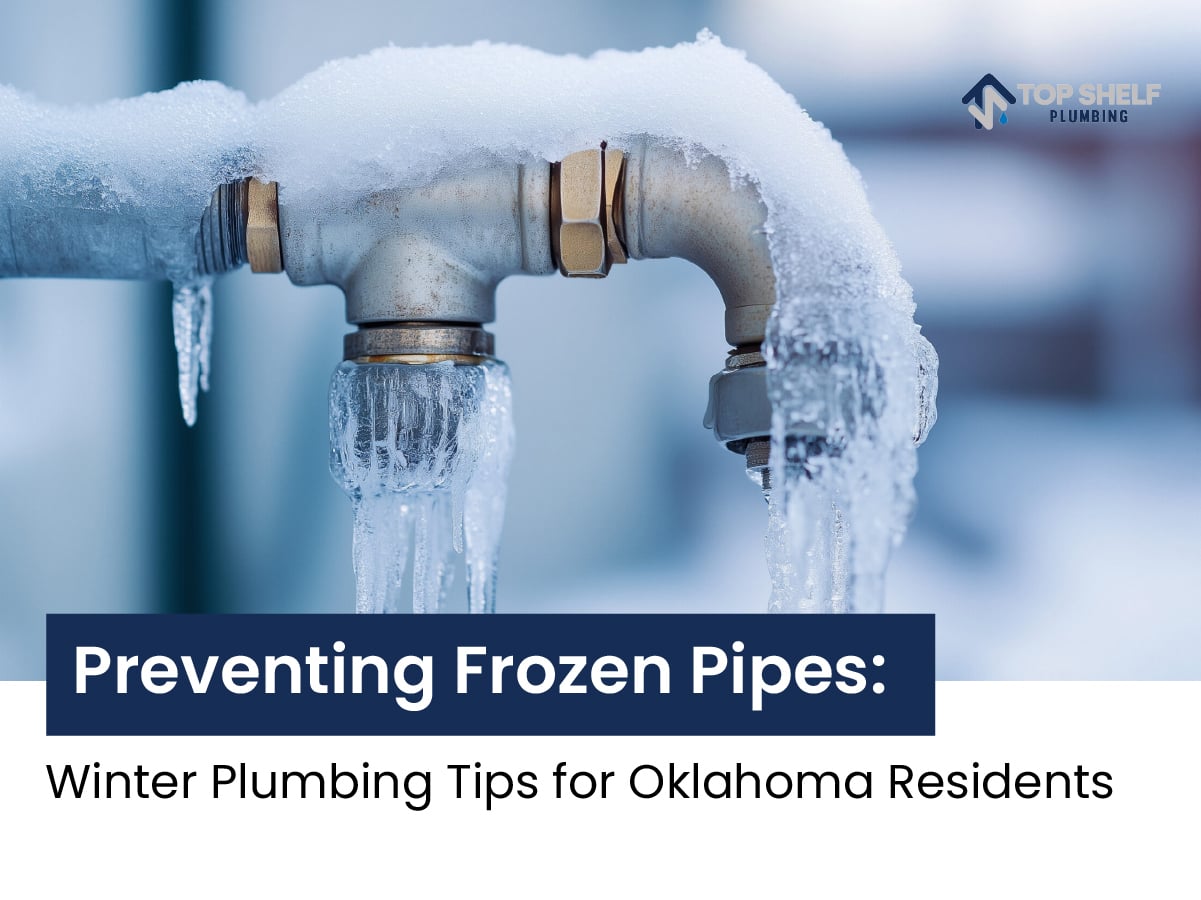
Every winter in Oklahoma, freezing temperatures put your home’s plumbing at serious risk. One frozen pipe can burst without warning—flooding rooms, destroying drywall, and leaving thousands of dollars in damage behind.
The truth is, most homeowners don’t think about their pipes until it’s too late. But by then, the damage is already done. The key is prevention. With a few smart steps, you can protect your home, your wallet, and your peace of mind before the next cold snap hits.
In this guide, you’ll find essential winter plumbing tips for Oklahoma residents. We’ll cover how to spot and protect vulnerable pipes, safe ways to thaw them if they freeze, and exactly what to do in a burst pipe emergency. Preparation now means avoiding disaster later.
Why Frozen Pipes Are a Risk in Oklahoma
Oklahoma winters might not seem as brutal as in the north, but that’s exactly why frozen pipes catch so many homeowners off guard. A sudden cold snap can push temperatures below freezing overnight, and it only takes a few hours of extreme cold for water inside pipes to turn to ice. When water freezes, it expands, building pressure that can crack or burst a pipe without warning.
The riskiest areas are the ones least protected from the cold:
- Outdoor faucets and hose connections
- Pipes in garages, crawl spaces, and attics
- Plumbing along exterior walls with little insulation
A single burst pipe can release hundreds of gallons of water in just one day, flooding rooms, damaging flooring, and even creating mold problems. According to the Insurance Information Institute, the average water damage claim from frozen pipes in the U.S. is over $10,000—and repairs can climb even higher.
For Oklahoma homeowners, the takeaway is simple: even one unexpected freeze can lead to expensive damage. That’s why preventing frozen pipes in Oklahoma isn’t just smart home maintenance—it’s a financial safeguard and peace-of-mind strategy.
How to Prevent Frozen Pipes in Oklahoma Homes
The best way to avoid costly damage is to stop pipes from freezing in the first place. Prevention doesn’t just save money—it protects your home from stress and disruption. Here are practical steps every Oklahoma homeowner should take before the next cold front.
Insulate Pipes for Winter Protection
Pipes in attics, crawl spaces, garages, and exterior walls are the most exposed. Wrapping them in foam insulation sleeves or heat tape provides a barrier against freezing air. According to the U.S. Department of Energy, proper insulation can reduce the risk of frozen pipes by more than 70%.
Let Faucets Drip During Freezing Temperatures
It might seem wasteful, but letting faucets drip keeps water moving through the system, making it less likely to freeze. Just a slow trickle overnight can prevent thousands in damage. One burst pipe can leak up to 250 gallons of water a day—a far greater “waste.”
Disconnect Outdoor Hoses and Protect Spigots
Leaving hoses attached traps water in the line, which can freeze and back up into your plumbing. Disconnect all hoses, drain them, and cover outdoor faucets with insulated covers.
Seal Drafts and Insulate Crawl Spaces
Cold air sneaks in through cracks around windows, doors, and foundation openings. Sealing these gaps and insulating crawl spaces keeps both your home and your pipes warmer.
Keep Indoor Heat Steady and Open Cabinets
During cold snaps, keep your thermostat at a consistent temperature—day and night. Also, open cabinet doors under sinks in the kitchen and bathroom. This lets warm air reach pipes that run along exterior walls.
Takeaway: Simple steps like insulating pipes, dripping faucets, and sealing drafts can prevent thousands of dollars in damage. For Oklahoma homeowners, being proactive isn’t optional—it’s protection against unpredictable weather and costly emergencies.
How to Thaw Frozen Pipes Safely
Even with preparation, a deep freeze can still cause pipes to ice over. The key is acting quickly—and safely.
Signs Your Pipes Are Frozen
- No water or reduced water flow from faucets
- Frost or condensation visible on exposed pipes
- Strange odors from drains (a sign of blockage from ice)
Safe Ways to Thaw Frozen Pipes
- Hair dryer or heat gun (low setting): Slowly apply warm air to the frozen section.
- Space heater: Place near the affected area, keeping safe distance from walls and flammable materials.
- Warm towels: Soak towels in hot water and wrap them around the pipe.
What NOT to Do: Never use an open flame, blowtorch, or propane heater. These are major fire hazards and can cause pipes to crack.
If you can’t locate the frozen section, or if thawing doesn’t restore water quickly, it’s time to call a licensed plumber. Waiting too long could mean a costly burst.
Burst Pipe Emergency Response in Oklahoma
Sometimes, even the best preparation isn’t enough. If a pipe bursts, every second counts. Here’s what to do:
- Shut off the main water supply immediately. This stops the flow of water and prevents further flooding.
- Turn off electricity if water is near outlets or appliances. Safety first.
- Drain faucets. Open taps to relieve pressure in the system.
- Collect leaking water. Use buckets, towels, or a wet/dry vacuum to limit damage.
- Call an emergency plumber. In Oklahoma, a licensed professional can respond quickly to stop leaks and begin repairs.
According to Oklahoma City utilities, during the 2021 winter storm, burst pipes contributed to record water loss and service calls. Acting fast can save you thousands in repairs and prevent your home from becoming unlivable.
Long-Term Winter Plumbing Protection
Prevention doesn’t end with one cold season. Long-term maintenance is the best insurance against plumbing disasters.
- Schedule annual plumbing inspections. A licensed plumber can check for weak spots, leaks, and uninsulated pipes before winter.
- Invest in smart leak detectors. These devices alert you if water is escaping, giving you time to act before serious damage.
- Choose a trusted local plumber. Companies familiar with Oklahoma’s unique weather patterns know exactly where homes are most vulnerable.
Routine care may cost a little up front, but it can save thousands in avoided emergencies. For Oklahoma homeowners, partnering with a reliable plumbing company means protection you can count on year after year.
Conclusion
Frozen pipes don’t have to be part of your winter story. With the right preparation—insulating pipes, dripping faucets, sealing drafts—you can protect your home from costly water damage. If pipes do freeze, knowing how to thaw them safely or respond to a burst can make the difference between a minor inconvenience and a major disaster.
At Top Shelf Plumbing, we’re proud to serve Oklahoma homeowners with fast, reliable winter plumbing solutions. Whether you need prevention, emergency repairs, or long-term protection, our team is here to help.
📞 Call us today at (844) 984-3984 or book an appointment online. Don’t wait until the next freeze—take action now and enjoy peace of mind all winter long.
