

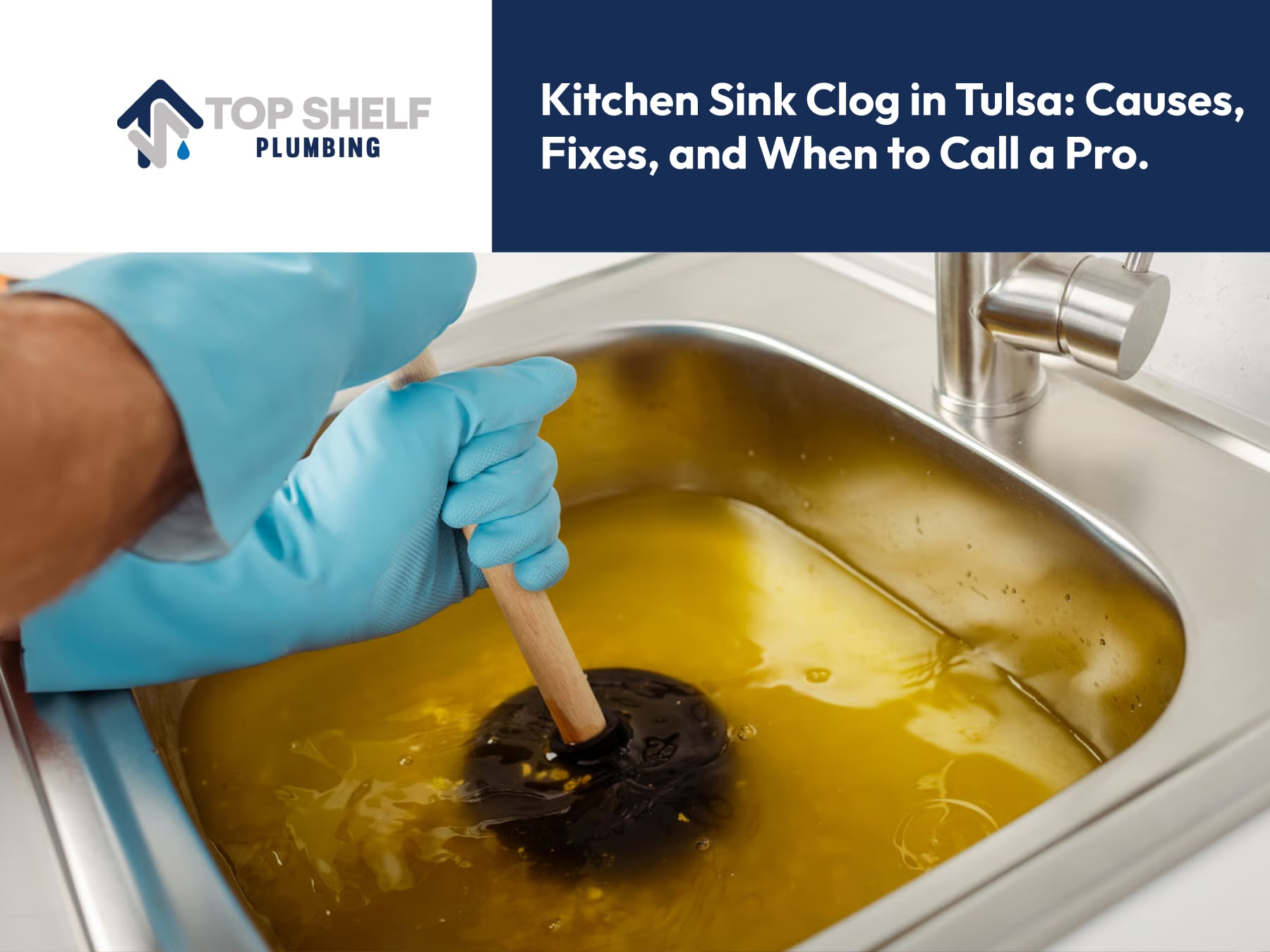
Why Kitchen Sink Clogs Are Common in Tulsa Homes
You’ve just finished preparing a wonderful home-cooked meal, the plates are stacked, and you turn on the faucet to start the dishes. But instead of the water cleanly whistling down the drain, it stops. Within seconds, a murky, greasy pool of water begins rising in your basin, bringing bits of leftover food and an unpleasant odor along with it.
Dealing with a kitchen sink clog tulsa families experience can paralyze your household routine in an instant. The kitchen sink is the undisputed functional heart of your home, and when it grinds to a halt, so does your peace of mind. Your immediate instinct is likely to find a fast, affordable way to force that water down the pipe.
But before you run to the hardware store for a harsh chemical fix or start dismantling your pipes with a standard wrench, you need to know what you are up against. Some minor sink backups are incredibly easy to solve on your own with basic household items. However, if the blockage is caused by hardened grease, a failed garbage disposal, or an underground main line restriction, forcing it can cause severe property damage.
At Top Shelf Plumbing, proudly known as “America’s Plumbing Team,” we believe in Service With Honesty. We don’t want you paying for a service call if a simple, safe DIY trick can get your kitchen flowing again. In this practical guide, we will break down why kitchen drains fail in the Tulsa area, the safe fixes you can try tonight, and the exact signs that prove it’s time to bring in professional backup.
The Main Culprits: Why Kitchen Sinks Clog
Unlike bathroom drains—which are typically choked by hair and soap scum—kitchen drains face a completely different set of structural enemies. Because we use this basin to wash away organic matter, oils, and starches, a kitchen pipe requires specific care.
The three most common causes of a kitchen sink clog in Tulsa include:
1. The FOG Trap (Fats, Oils, and Grease)
This is the number one cause of kitchen drainage failure. When you rinse a greasy pan with hot water, the grease looks fluid and harmless. However, as soon as that liquid fat travels a few feet down your cool, underground pipes, it drops in temperature, solidifies, and coats the interior walls of your plumbing. Over time, this grease acts like a sticky net, catching food scraps and thickening until it chokes off the water flow entirely.
2. Starchy and Fibrous Food Scraps
Many homeowners treat their garbage disposal like a heavy-duty trash can. If you allow expandable starches (like rice, pasta, or potato peels) or stringy fibers (like celery and corn husks) down the drain, you are asking for trouble. Rice and pasta will continue to absorb water and swell inside your trap, forming an impenetrable paste, while fibrous vegetables can wrap around disposal components and freeze the motor.
3. Hard Water Scale Matrix
Our municipal water supply in Green Country contains high levels of dissolved minerals like calcium and magnesium. Over decades, this “hard water” creates a rough, calcified crust on the inside of your drain lines. This rough surface reduces the diameter of your pipes and easily snags small food particles that would normally wash away harmlessly.
3 Safe DIY Fixes to Try Right Now
If you are currently staring at a basin full of standing water, do not panic. Put down the harsh chemical cleaners—which generate intense chemical heat that can melt modern PVC or destroy older metal infrastructure—and try these safe, plumber-approved methods instead.
Method 1: The Boiling Water Flush (For Light Grease)
If your sink is draining incredibly slowly but hasn’t completely stopped, the blockage might just be a congealed layer of dish soap and light cooking fat.
- Bring a large pot of water to a rolling boil.
- Pour it slowly and directly down the drain opening.
- The intense heat can melt the grease layer, flushing it out into the main sewer line. (Note: Only use this method if you have metal or sturdy PVC pipes; avoid pouring boiling water directly onto fragile plastic utility tubes).
Method 2: The Baking Soda and Vinegar Volcanic Reaction
You can use a natural, non-toxic chemical reaction to break up stubborn organic sludges without damaging your plumbing infrastructure.
- Remove any standing water from the sink basin using a cup.
- Pour one cup of dry baking soda straight down the drain.
- Follow it with one cup of white distilled vinegar.
- Cover the drain with a stopper or a rag to trap the fizzing action inside the pipe.
- Wait 15 minutes, then flush the lines with hot tap water.
Method 3: The Mechanical Hand Auger or Zip-Tool
If a clump of food waste is stuck right in the U-shaped pipe beneath your cabinet (the P-trap), a manual plumbing snake can easily clear it. Simply feed a flexible plastic or metal hand snake down the drain line, twisting the handle as you encounter resistance. The tool will either break the food mass apart or allow you to pull it back up and throw it in the trash.
Understanding the Garbage Disposal Connection
If your kitchen sink features a garbage disposal, the clog may not be in the pipes at all—the appliance itself might be frozen or electrically tripped.
“A garbage disposal and a kitchen sink drain share the exact same exit pathway. If the disposal cannot spin, water will immediately back up into the sink basin.”
Before you assume you need a drain cleaning service, run through these two quick checks under the sink:
- The Reset Switch: If you flip the disposal switch and hear dead silence, look at the very bottom of the unit under the sink. Locate the small red square button. If the motor overheated, this safety switch will have popped out. Simply push it firmly back in and try the wall switch again.
- The Manual Crank: If you flip the switch and hear a low, electrical hum but the blades won’t spin, turn the power off immediately. The motor is jammed by a hard object. Insert a 1/4-inch Allen wrench into the hexagonal hole located directly in the center of the unit’s bottom plate and crank it back and forth to break the jam manually.
When to Call a Pro: Signs of a Deeper Issue
While a plunger or a baking soda flush is great for an isolated, shallow backup, certain symptoms indicate that your kitchen sink clog is merely a warning sign of a much larger structural failure.
It is time to bring in Top Shelf Plumbing if you experience any of the following:
- Widespread Backups: If running your kitchen sink causes water to bubble up or flood into your laundry room drain or a nearby bathroom shower, the restriction is deep within your main sewer line.
- The “Gurgle” Effect: If your kitchen sink makes a loud, rhythmic bubbling or gurgling sound long after the water has finished draining, your system is starving for oxygen due to a venting restriction or a primary line obstruction.
- Continuous Clogs: If you successfully clear the sink with a plunger, but it clogs right back up three days later, a dense obstruction (like tree roots or solid grease scale) requires industrial intervention.
Clog Still Not Clearing?
Stop Before a Small Clog Becomes a Bigger Backup
If the sink is still draining slowly, making gurgling sounds, or
backing up again, the blockage may be deeper inside the line.
Top Shelf Plumbing can inspect and clear your kitchen drain safely.
How Professional Kitchen Drain Cleaning Works
When a stubborn kitchen sink clog does not respond to basic DIY methods,
Top Shelf Plumbing uses professional equipment to locate and remove the
blockage safely. We choose the right method based on the condition of your
drain rather than treating every clog the same way.
Sewer Camera Inspection
A small camera helps identify heavy grease buildup, damaged pipe
sections, root intrusion, or foreign objects inside the drain.
Mechanical Drain Cleaning
A motorized drain cable breaks through compacted food waste, solid
blockages, and other debris lodged inside the kitchen line.
High-Pressure Hydro-Jetting
High-pressure water removes stubborn grease and buildup from the inside
walls of the pipe when the plumbing system is suitable for hydro-jetting.
The method used depends on the location of the clog, the pipe condition,
and the type of material causing the blockage.
High-Definition Sewer Camera Inspections
We eliminate the guesswork by feeding a waterproof, fiber-optic camera directly down your drain lines. We view the live feed on a high-resolution monitor right alongside you, showing you the exact cause and location of the restriction.
Industrial Hydro-Jetting
For severe, grease-choked kitchen lines, a standard cable snake only punches a narrow hole through the sludge. We utilize advanced hydro-jetting equipment that blasts highly pressurized water (up to 4,000 PSI) through specialized scrubbing nozzles. This safely peels decades of hardened grease, food debris, and mineral scale completely off the interior walls, resetting your pipes to a “like-new” state.
Why Top Shelf Plumbing is Your Trusted Kitchen Partner
Your kitchen is the operational hub of your home, and navigating a major drainage failure is stressful. You deserve a team that acts with urgency, provides complete financial transparency, and respects your property.
At Top Shelf Plumbing, we are incredibly proud to be America’s Plumbing Team, and we operate every day under three vital core values:
- Service With Honesty: We practice flat-rate, upfront pricing. Our technicians will inspect your lines, show you our findings, and provide a clear, binding quote before any work begins. No hidden fees, no surprise hourly charges.
- Service With A Smile: We know you are inconvenienced. Our highly trained plumbers arrive on time, in clean uniforms, bringing a friendly, reassuring attitude to your home. We use heavy drop cloths, wear protective shoe covers, and thoroughly sanitize our work area before we wave goodbye.
- Service With Integrity: We stand strictly behind our craftsmanship. We don’t apply temporary band-aids; we execute permanent, code-compliant repairs designed to add lasting value and comfort to your home.
Ready to Get Your Kitchen Flowing Freely Again?
Don’t let a stubborn clog disrupt your family’s routine or ruin your evening cleanup. Put away the dangerous chemical cleaners, step back from the heavy tools, and let the local professionals handle the dirty work safely and efficiently.
Call America’s Plumbing Team today at (844) 984-3984 to schedule your professional drain clearing or camera inspection. You can also contact us online to book an appointment. Let Top Shelf Plumbing restore your kitchen with honesty, integrity, and a smile!
Top Shelf Plumbing
Get Your Kitchen Sink Flowing Properly Again
Recurring clogs, standing water, foul smells, and multiple slow drains
can indicate a deeper blockage. Schedule service with Top Shelf Plumbing
for professional kitchen drain help in Tulsa and surrounding areas.
Serving Tulsa and surrounding Oklahoma communities.
