

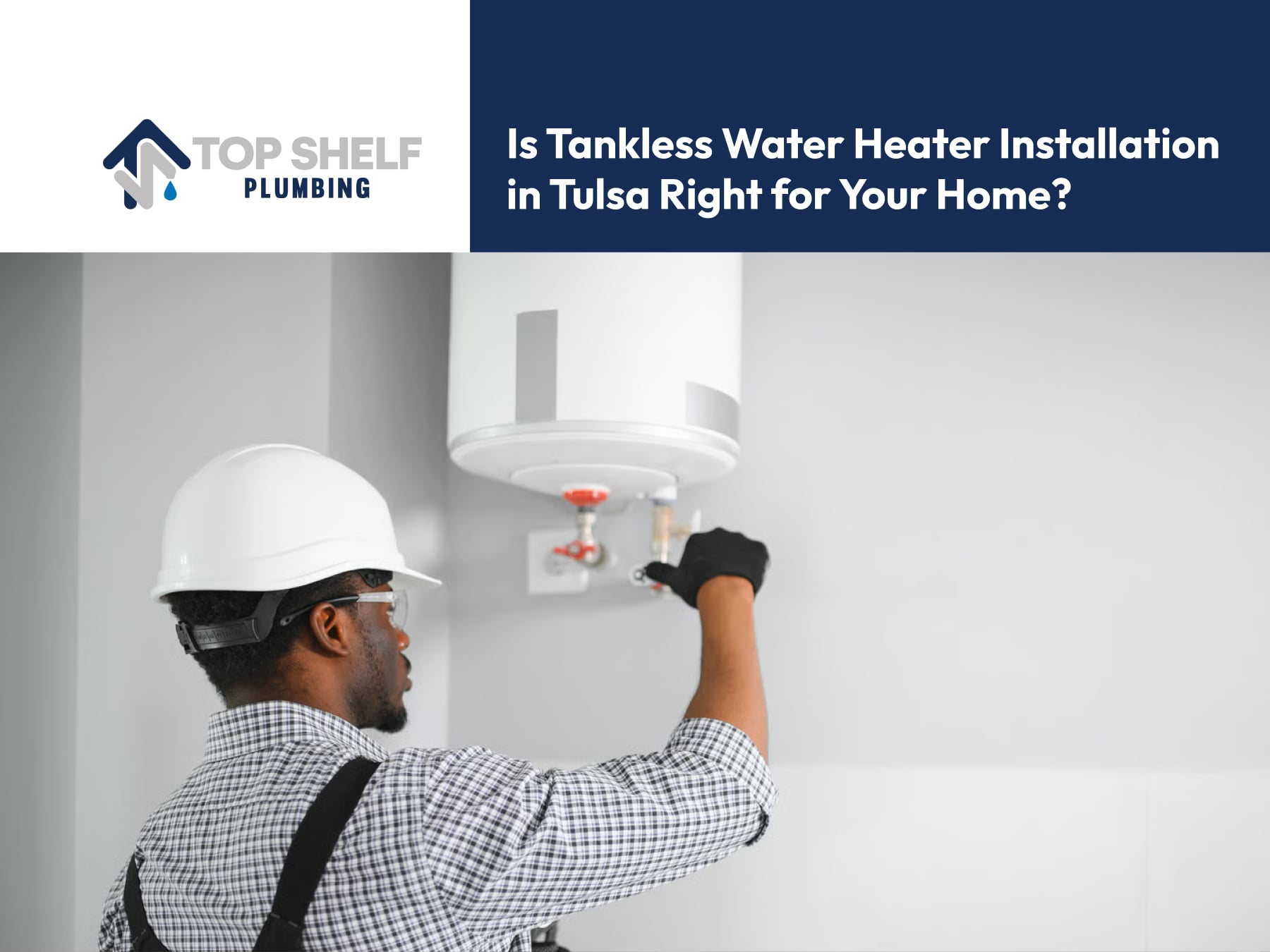
The Endless Hot Water Upgrade You’ve Been Dreaming Of
Planning a master bathroom remodel with a massive soaking tub or a luxurious multi-jet rainfall shower? You are going to need the hot water capacity to match your high-end design. If you are tired of scheduling your showers around your family’s laundry routine, or if you simply want to reclaim the square footage currently occupied by a bulky metal tank, tankless water heater installation in Tulsa is one of the smartest investments you can make for your home.
When upgrading your residential plumbing, shifting from a traditional tank to a modern, on-demand tankless system is a game-changer. It offers unparalleled energy efficiency, endless hot water, and a lifespan that far outpaces traditional models. However, retrofitting an older Oklahoma home for a tankless system requires careful project planning, expert craftsmanship, and a deep understanding of your home’s gas and electrical infrastructure.
At Top Shelf Plumbing, we are “America’s Plumbing Team.” We specialize in helping homeowners navigate complex remodels and high-value plumbing upgrades. In this comprehensive guide, we are going to explore the technology behind on-demand heating, the true pros and cons of making the switch in the Tulsa area, and exactly what to expect during the installation process.
The On-Demand Revolution: How Tankless Technology Works
To understand the value of a tankless system, you first have to look at the flaws of the traditional water heater. A standard unit stores 40 to 50 gallons of water, keeping it heated to 120 degrees 24 hours a day, 7 days a week. This is called “standby heat loss.” You are paying to heat water while you are sleeping, while you are at work, and while you are on vacation.
A tankless water heater completely eliminates this waste.
Instead of storing water, a tankless unit utilizes high-powered gas burners or electrical elements to flash-heat water instantly as it flows through a highly efficient heat exchanger.
- You turn on the hot water tap.
- The system detects the flow of water and instantly ignites.
- The water is heated to your exact desired temperature as it passes through the unit.
- When you turn off the tap, the system shuts down entirely.
“With a tankless water heater, you aren’t paying to keep water hot all day; you are only paying for the exact amount of hot water you use, exactly when you need it.”
The Big Benefits for Your Home Remodel
If you are already in the process of renovating your home, rolling a water heater upgrade into your project makes perfect sense. Here is why modern homeowners are ditching their tanks:
1. Reclaiming Valuable Square Footage
A traditional 50-gallon water heater is massive. It takes up a significant footprint in your garage, basement, or utility closet. Tankless water heaters, on the other hand, are roughly the size of a carry-on suitcase. They mount cleanly onto a wall, freeing up valuable floor space. If you are remodeling a smaller home, relocating your water heater to an exterior wall or shrinking its footprint can literally give you an entire closet’s worth of new storage space.
2. Unlimited Hot Water for Luxury Fixtures
If you are investing in a 70-gallon freestanding soaking tub, a standard 40-gallon water heater will run cold before the tub is even halfway full. Tankless systems provide a continuous, endless flow of hot water. You can run the dishwasher, do a load of laundry, and have two family members showering simultaneously without anyone ever experiencing a drop in temperature.
3. Maximum Energy Efficiency
Because they eliminate standby heat loss, tankless water heaters are incredibly energy efficient. According to the Department of Energy, homes that use 41 gallons or less of hot water daily can be 24% to 34% more energy efficient with a tankless water heater. Over the lifespan of the unit, these monthly utility savings add up significantly, helping to offset the initial investment.
4. A Superior Lifespan
A traditional tank water heater will typically last 8 to 12 years before the steel tank rusts out and begins to leak. Because tankless systems do not store water, they are not subjected to the same constant corrosive forces. With proper annual maintenance, a high-quality tankless water heater can easily last 20 years or more.
Traditional Tank vs. Tankless: The Quick Comparison
Still on the fence? Here is a breakdown of how these two systems stack up against each other for a typical residential upgrade:
| Feature | Traditional Tank Water Heater | Tankless Water Heater |
| Hot Water Supply | Limited (40-50 gallons); takes time to recover once empty. | Endless, continuous flow; never runs out. |
| Energy Efficiency | Lower; constantly wastes energy on standby heating. | High; only uses energy when hot water is actively demanded. |
| Lifespan | 8 to 12 years (prone to tank rust and ruptures). | 15 to 20+ years (with proper maintenance). |
| Space Required | Very large footprint; requires floor space and a drain pan. | Compact, wall-mounted design; frees up square footage. |
| Upfront Cost | Lower initial purchase and installation cost. | Higher upfront investment (requires infrastructure upgrades). |
The Tulsa Factor: Important Considerations for Your Upgrade
While tankless systems are phenomenal, they are not a simple “plug-and-play” swap for an old tank, especially in our local climate. If you are planning a tankless water heater installation in Tulsa, there are two major regional factors our project managers will help you navigate.
The Hard Water Challenge
The municipal water supply in Green Country is heavily laden with calcium and magnesium. When hard water is flash-heated inside a tankless unit’s tiny heat exchanger, it accelerates the buildup of mineral scale. If this scale is ignored, it will choke off the water flow, reduce efficiency, and eventually destroy the unit.
The Solution: To protect your investment, a tankless unit in Tulsa requires an annual “descaling” flush, where a plumber circulates a specialized vinegar or chemical solution through the unit to dissolve the minerals. We also highly recommend pairing your new tankless heater with a whole-home water softening system to eliminate the hard water problem entirely.
Groundwater Temperature Swings
During an Oklahoma winter, the temperature of the water entering your home from the city mains can drop significantly. A tankless water heater has to work much harder to heat 40-degree winter water up to 120 degrees than it does during the summer.
The Solution: Proper sizing is critical. At Top Shelf Plumbing, we don’t just guess which unit you need. We calculate your home’s peak flow rate (how many fixtures you might run at once) and the local winter temperature rise to ensure we install a unit powerful enough to keep your showers steaming hot, even in the middle of a February freeze.
Project Planning: What to Expect During Installation
Because a tankless water heater heats water instantly, it requires a massive, sudden burst of energy. Upgrading from a tank to a tankless system almost always involves retrofitting your home’s infrastructure. Here is what our installation process looks like:
- Gas Line Upgrades: Most older homes have a 1/2-inch gas line running to the water heater. A gas-powered tankless unit requires a much larger volume of gas to fire its high-output burners, meaning we typically need to upgrade your gas line to a 3/4-inch pipe.
- Venting Solutions: Tankless systems require specialized, dedicated venting. Traditional tanks use galvanized metal vents, but high-efficiency tankless units produce acidic condensation in their exhaust, requiring specialized stainless steel or PVC concentric venting that must be routed safely out of the home.
- Electrical Requirements: Even gas-powered tankless units require an electrical connection to power the digital thermostat, the electronic ignition, and the internal computer board. We ensure a properly grounded outlet is available near the installation site.
While this retrofitting requires a higher upfront investment, it is a permanent infrastructure upgrade that instantly modernizes your home and increases its overall resale value.
Choose Top Shelf Plumbing for Your High-End Upgrades
A major home remodel requires a plumbing contractor who understands the big picture. You need a team that respects your vision, executes complex installations flawlessly, and stands behind their craftsmanship long after the final inspection is passed.
At Top Shelf Plumbing, we are Tulsa’s premier residential plumbing experts. We bring our core values to every single project, ensuring your upgrade is a smooth, rewarding experience:
- Service With Honesty: We provide transparent, itemized bids for your remodel. We will explain exactly what infrastructure upgrades are needed for a tankless system and give you an honest assessment of whether the ROI makes sense for your specific home.
- Service With A Smile: Remodeling can be stressful, but our team brings a positive, collaborative attitude to the job site. We coordinate seamlessly with your general contractors, tile setters, and electricians to keep your project on schedule.
- Service With Integrity: We never cut corners. From ensuring perfect, code-compliant venting to sizing your unit exactly right for Oklahoma winters, we install systems designed to provide decades of flawless performance.
Ready for Endless Hot Water?
Don’t let an outdated, bulky water tank dictate the design and comfort of your newly remodeled home. Reclaim your space, lower your energy bills, and enjoy the luxury of endless hot water with a custom-designed tankless system.
When you are ready to explore your options for a professional tankless water heater installation in Tulsa, trust the experts at America’s Plumbing Team.
Call Top Shelf Plumbing today at (844) 984-3984 to schedule a consultation with our project planning team, or contact us online to request an estimate. Let’s build the modern, efficient home of your dreams—with honesty, integrity, and a smile!
