

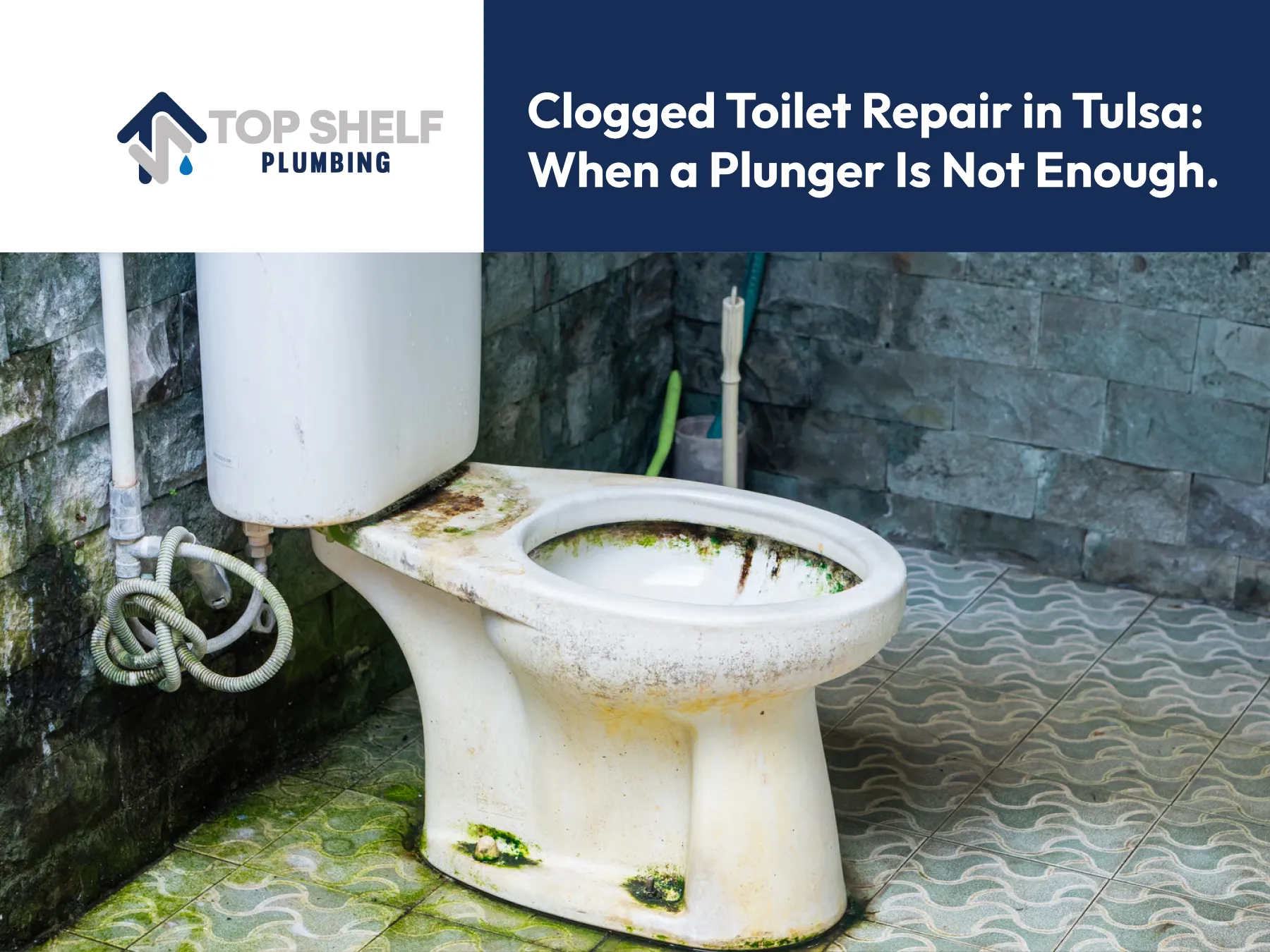
The Rising Tide of Panic: When the Flush Fails
There is a universal moment of sheer panic that every homeowner experiences: you push the toilet handle, but instead of the water swirling neatly down the drain, it stops. Then, slowly and ominously, the water level begins to rise toward the rim of the bowl. You freeze, frantically hoping it stops before it spills contaminated water all over your bathroom floor.
When facing a backup, your first instinct is to grab the plunger. For minor issues—like too much toilet paper—a standard plunger is often the perfect tool. But what happens when you plunge with all your might, and the water still refuses to budge? Or worse, what if the toilet clears for a day, only to back up again the very next time you use it?
If you are dealing with a stubborn, recurring, or overflowing blockage, you need professional clogged toilet repair tulsa homeowners can rely on. Plungers have strict limitations, and repeatedly forcing a clog can actually push the blockage deeper into your home’s plumbing system or damage the delicate wax seal beneath the fixture.
At Top Shelf Plumbing, known as “America’s Plumbing Team,” we bring rapid response times and clear diagnostics to your most stressful household emergencies. In this comprehensive guide, we will explore the anatomy of a severe clog, the unique environmental factors in Oklahoma that contribute to plumbing backups, what you should absolutely never pour into your toilet bowl, and exactly when it is time to put down the plunger and call the professionals.
The Anatomy of a Toilet Clog: Why the Plunger Fails
To understand why a plunger doesn’t always work, you have to look at the hidden architecture of your toilet.
Directly beneath the bowl is a curved, S-shaped channel called the trapway. This curve is designed to hold a small amount of water at all times, which acts as a protective seal to stop hazardous, foul-smelling sewer gases from rising out of the municipal sewer and into your bathroom.
While the trapway is essential for your health and safety, its narrow, curved design makes it a prime location for blockages. When you use a plunger, you are relying on simple physics: creating a vacuum seal and using hydraulic pressure (pushing and pulling water) to dislodge a blockage located right inside that trapway.
However, the plunger becomes completely useless if:
- The clog is a hard object: Hydraulic pressure will not dissolve a plastic toy, a dropped toothbrush, or a flushable wipe that has wrapped around the bends of the pipe.
- The clog has moved past the toilet: If the blockage is located several feet down the drain line or in the main sewer trunk, the suction of a plunger simply cannot reach it.
- The clog is caused by systemic failure: If your home’s roof vents are blocked (which deprives the plumbing system of the air it needs to flush), no amount of plunging will solve the pressure imbalance.
Plunger Not Solving It?
Your Toilet Clog May Be Deeper Than the Bowl
Recurring clogs, gurgling, foul odours, or water backing up through
another fixture may indicate a deeper drain problem. Top Shelf
Plumbing can diagnose the cause and recommend the appropriate repair.
5 Signs You Need Professional Clogged Toilet Repair in Tulsa
If you are standing over a bowl of standing water, look for these five critical warning signs. If you recognize them, it is time to step back and let the experts handle the situation.
1. The Gurgle Effect (Water Backing Up Elsewhere)
This is a massive red flag. If you plunge your toilet and suddenly hear a gurgling sound coming from your bathtub, or if dirty water starts bubbling up into your shower drain, stop plunging immediately. Your plumbing fixtures are interconnected. This symptom indicates that the blockage is not in the toilet itself, but deep within your main sewer line. The plunger is simply pushing the water down the pipe until it hits the main line clog, forcing the wastewater to reverse course and exit through the lowest drain in your home (the bathtub).
2. A Hard, Foreign Object Was Flushed
If you have toddlers in the home, the toilet bowl often looks like a fascinating water feature. We have pulled toy cars, action figures, makeup compacts, and toothbrushes out of Tulsa toilets.
If you know (or heavily suspect) that a hard object was flushed, do not use a plunger. Plunging will only wedge the hard object deeper into the porcelain trapway, turning a simple extraction into a costly scenario where the entire toilet must be replaced because the object cannot be dislodged.
3. The “Flushable” Wipes Trap
Despite the marketing claims on the packaging, so-called “flushable” wipes are terrible for your plumbing. Unlike standard toilet paper, which is designed to disintegrate in water within minutes, thick sanitary wipes remain completely intact. They snag on tiny imperfections in your pipes, tangling together to form massive, impenetrable clogs. A plunger will rarely generate enough force to push a heavy wad of wipes through the system.
4. Constant, Recurring Blockages
If you find yourself reaching for the plunger two or three times a week, your toilet is trying to tell you something. Frequent clogging in older homes is often caused by calcified scale buildup inside the toilet’s trapway. Over the years, this scale narrows the exit path so much that even normal amounts of waste cannot pass through.
5. Foul Odors That Will Not Go Away
If your bathroom constantly smells like raw sewage, even after a deep clean, a stubborn clog may have absorbed a massive amount of organic bacteria, or the wax ring beneath the toilet may have failed. A professional can pull the toilet, clear the line, and reset the fixture with a brand-new, airtight seal.
The Danger Zone: Why You Should Never Use Liquid Drain Cleaners
When a plunger fails, many homeowners head to the hardware store for a brightly colored bottle of liquid drain cleaner. We strongly advise against this. Pouring harsh, caustic chemicals into a clogged toilet is one of the most dangerous and expensive mistakes you can make.
“Chemical drain cleaners generate intense, localized heat to dissolve blockages. When this heat is trapped inside a porcelain toilet bowl, it can literally crack the fixture in half, instantly destroying the toilet and flooding your bathroom.”
Here is why professionals despise store-bought chemicals for toilet clogs:
- They Melt the Wax Ring: The intense heat can melt the protective wax seal anchoring your toilet to the floor, leading to hidden leaks that rot your subfloor.
- They Create a Toxic Hazard: If the chemical fails to clear the clog (which is highly common with hard objects or thick wipes), you are now left with a toilet bowl full of highly corrosive, toxic acid. When our plumbers arrive, we have to carefully navigate this hazardous chemical soup to fix the problem safely.
- They Damage Older Pipes: If you live in a historic Tulsa home with cast-iron or galvanized plumbing, acidic drain cleaners will rapidly accelerate pipe corrosion, leading to massive underground leaks.
The Professional Arsenal: How We Fix the Problem
When you hire a top-tier company to tackle your clogged toilet repair tulsa, we do not rely on guesswork or hazardous chemicals. We bring specialized tools designed to clear the blockage safely and permanently.
Here is how our methods compare to the DIY approach:
| Clearing Method | How It Works | Best Used For | Risk to Your Home |
| Store-Bought Chemicals | Heat-generating acid meant to burn organic matter. | Nothing. (Highly discouraged). | Extreme: Can crack porcelain and cause chemical burns. |
| Standard Cup Plunger | Uses a flat bottom to push water. | Sinks and flat drains. | High: Fails to create a seal in a curved toilet bowl. |
| Flange Plunger | Has a rubber sleeve that fits into the toilet trapway. | Minor toilet paper clogs. | Low: Safe if used gently. |
| Professional Closet Auger | A specialized, flexible steel cable with a protective rubber boot to prevent scratching the porcelain. | Retrieving hard objects; breaking up stubborn, deep clogs in the trapway. | None: Safe, highly effective, and fast. |
| Toilet Pull & Camera Inspection | Removing the toilet entirely to run a fiber-optic camera into the main sewer line. | Diagnosing main line blockages, tree roots, or severely wedged items. | None: Provides absolute clarity and a permanent fix. |
Tulsa’s Environmental Impact on Your Toilets
Sometimes, a constantly clogging toilet has nothing to do with what you flush, but rather the environment your home is built upon.
The Hard Water Dilemma
Oklahoma’s municipal water supply is notoriously “hard,” containing high levels of dissolved calcium and magnesium. These minerals build up inside the tiny “siphon jets” located underneath the rim of your toilet bowl. When these jets clog with calcified scale, the toilet loses its flushing velocity. Without a powerful wash of water, waste simply sits in the bowl or clogs the trapway.
Expansive Clay Soils
Tulsa is built on expansive clay soil that swells during spring rains and shrinks during late-summer droughts. This constant heaving can cause your underground sewer pipes to shift, crack, or develop “bellies” (sags in the pipe where water and waste pool together). If your toilet clog is a symptom of a sagging sewer line, our technicians can use advanced camera technology to locate the underground issue and provide a targeted repair strategy.
Why Top Shelf Plumbing is Your Best Choice
Dealing with a blocked, unsanitary toilet is incredibly stressful. You need a contractor who respects your home, acts with urgency, and provides a lasting solution rather than a temporary band-aid.
At Top Shelf Plumbing, we are incredibly proud to be America’s Plumbing Team. When you invite us into your home to solve a plumbing crisis, you will experience our three foundational core values firsthand:
- Service With Honesty: We provide transparent, upfront, flat-rate pricing. If we can clear the toilet with a quick auger service, we will do exactly that. If the toilet is irreparably cracked or aging, we will explain why a replacement is more cost-effective. We give you all the information you need to make the right choice for your budget.
- Service With A Smile: We know you are frustrated. Our highly trained technicians arrive on time, in clean uniforms, and bring a positive, empathetic attitude. We utilize heavy drop cloths and shoe covers to ensure we never track a mess through your living areas, and we clean and sanitize our workspace before we leave.
- Service With Integrity: We don’t just fix the symptom; we identify the root cause. Whether it requires a simple extraction, pulling the toilet to replace the wax ring, or hydro-jetting your main sewer line, we execute every repair with flawless craftsmanship and premium materials.
Let’s Get Your Bathroom Back to Normal
Do not spend another evening battling a stubborn toilet with a plunger, and do not risk cracking your porcelain with dangerous chemicals. Protect your floors, your health, and your peace of mind by bringing in the local professionals.
When you need rapid, reliable clogged toilet repair in Tulsa, turn to the team that treats your home like their own.
Call Top Shelf Plumbing today at (844) 984-3984 for fast, professional plumbing repair. You can also contact us online to schedule your service appointment. Let us restore your home’s comfort and sanitation with honesty, integrity, and a smile!
Professional Toilet Repair in Tulsa
Get Your Bathroom Back to Normal
Stop repeatedly plunging a toilet that keeps clogging. Top Shelf
Plumbing can locate the blockage, clear it safely, and determine whether
your toilet or drain line needs further repair.
Serving Tulsa and surrounding Oklahoma communities.
